

The diaolous are a UNESCO world heritage site, but the tourist infrastructure in the area (at least for Westerners) is surprisingly under-developed. The most realistic way to see the diaolous (which are considerably spread out) is to hire a taxi in Kaiping and have the cabbie take you around.
There are four "clusters" of diaolous on the UNESCO list, and the biggest one is Zili.


Zili is simultaneously a historical site and a living farming community, which makes it feel very authentic. Several of the diaolous are preserved as historical buildings, and you can go into at least three of them. Others, however, are still being lived in (one even has a parking pad!);

. . . and the farmers' fields are all around.


The diaolous were built in the early 20th century with money either sent back or brought back from Chinese families living abroad. I gather that after making money overseas, families either returned or else sent money back to other family members still in China, and funded the construction of diaolous to simultaneously show off their wealth and provide defensive structures in case of bandit attacks. Really, though, in terms of day-to-day significance, the diaolous were mostly dwellings for single or multiple families, and evidently this function continues for many of them today.
The authenticity of the contemporary farming village combined with the ability to climb up some of the diaolous made visiting Zili quite magical.

The village is not entirely made up of the diaolous, but all of the buildings are old and have historic charm.


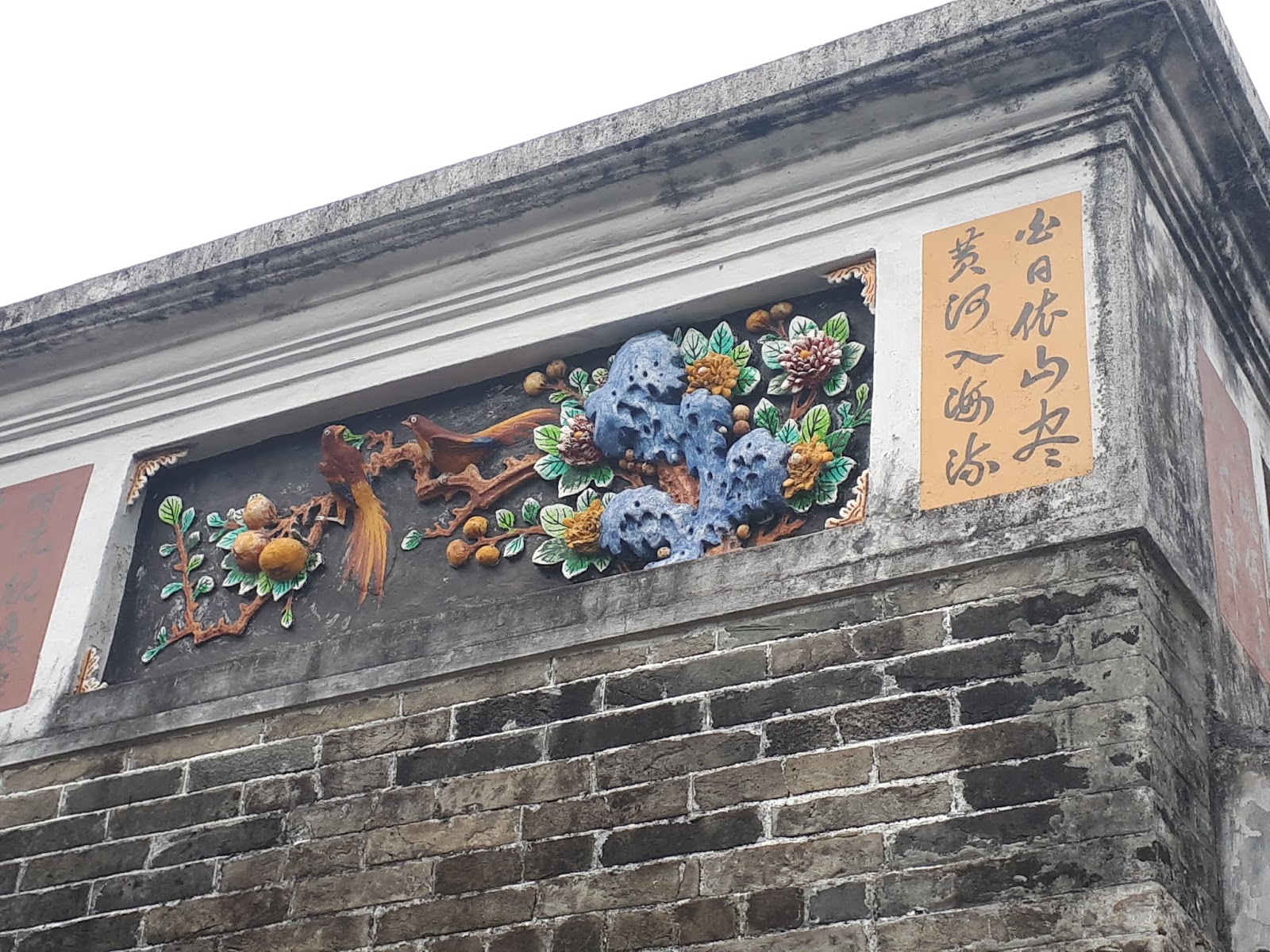

Many of the farm houses had diverse objects on the walls outside, which I found intriguing. It was something I have not noticed before anywhere else.


Here are some more pictures of the Zili diaolous.


And a couple of pictures from inside one of the diaolous:


It would be difficult to see all four UNESCO-listed clusters in one day, I think, but two was manageable in a long afternoon. The Jinjiangli cluster is very different than Zili, and noteworthy particularly because it includes the largest diaolou, Ruishilou.

Ruishilou is nine stories high, and requires a separate ticket because it is still privately owned. Besides being the tallest, it is by far the most decorated diaolou that I saw.


The view of Jinjiangli village and the surrounding countryside from Ruishilou was pretty cool, despite the haze in the air.

Look at how tightly packed the houses are, with just very narrow alleys in between them.

As at Zili, farmers still live at Jinjiangli--actually other than the three diaolous, all the buildings are inhabited, and agricultural activity is everywhere.


Beside Ruishilou is a diaolou that was exclusively built for defensive purposes.

The third and last diaolou at Jinjiangli is called Shengfenglou, which is considerably shorter than Ruishilou.

Shengfenglou had this plaque in it, which made me wonder if it had been built with money sent back from Calgary.

Shengfenglou also had this booster seat for a child in it!

Here are some more pictures from Jinjiangli.


